
Bioanalytical
Services / Bioanalytical
- Laboratory Services
Bioanalytical Services
- Method Development
- GLP Compliance
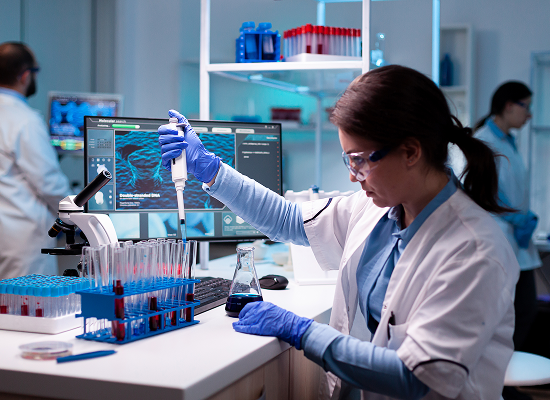
From method design to regulatory submission, we provide complete bioanalytical support
built on validated processes, global compliance, and scientific integrity.
Trusted by global sponsors for delivering GLP- and GCP-compliant studies that meet
international regulatory standards.
Why Bioanalytical Services Matter
Accurate bioanalysis is fundamental to BA/BE research success. From early-phase studies to post-approval monitoring, precise quantification of drugs, metabolites in biological matrices ensures reliable pharmacokinetic and safety assessments.
Our validated methods, combined with GLP adherence and 21 CFR Part 11-compliant systems, ensure your data meets the highest international quality standards for regulatory submissions. We deliver the data confidence that drives innovation, compliance, and BA/BE research success.
Our Analytical Excellence
Our analytical excellence is built on precise methodologies and advanced clinical evaluation techniques. We conduct specialized studies, including nasogastric tube assessments and controlled dosing protocols, ensuring accurate and reliable data.
Each study is executed under standardized conditions with strict safety and compliance measures. Integrated monitoring systems and rigorous subject screening further strengthen data integrity. This approach enables consistent, high-quality, and scientifically robust outcomes.
- Innovative Methodologies
Our bioanalytical laboratory is approximately 6,000 square feet and was designed to support
high-throughput, high-quality sample analysis.

- LC-MS/MS & ICP-MS
Liquid Chromatography Mass Spectrometry
The facility has well-equipped sample processing areas and dedicated LC-MS/MS laboratories that meet regulatory requirements for bioanalytical method development and validation. We use eight LC-MS/MS systems to meet a variety of sensitivity requirements, including:
- API 4000 (2 units)
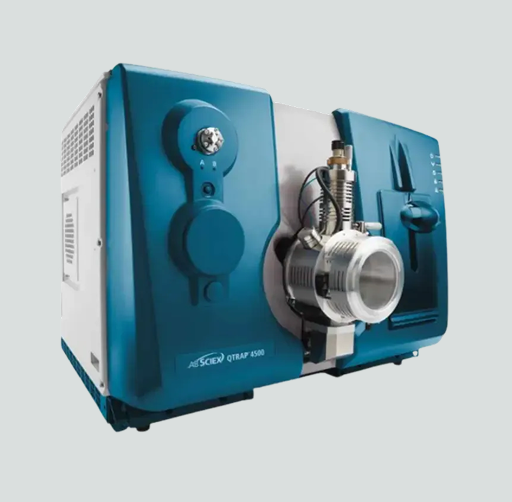
- API 4500 (2 units)
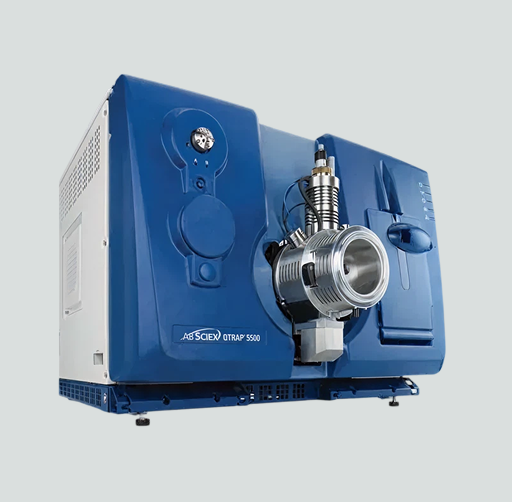
- API 5500 (2 units)
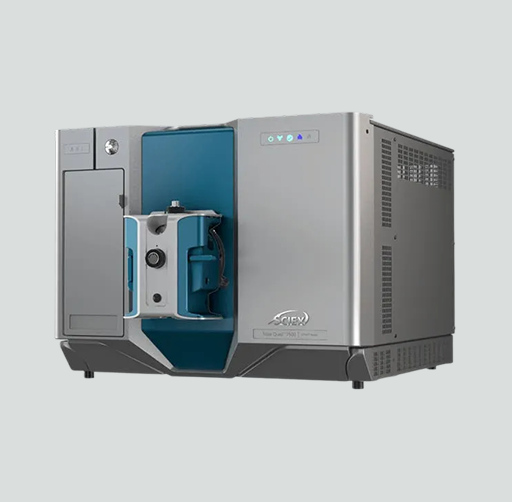
- Waters XEVO TQXS (2 units)
- ICP-MS (1units)
In addition, we have a dedicated ICP-MS system for elemental analysis, which extends our
analytical capabilities to include trace metal quantification and related studies. Additional key infrastructure includes:
Deep freezers with temperature ranges from -20°C to -80°C for secure sample storage.
● Online temperature monitoring system for all deep freezers and refrigerators.
● Micro-balance room for high-precision weighing.
● Separate rooms for storing reference standards and chemicals to ensure safety.
- Innovative Methodologies
Our bioanalytical laboratory is approximately 6,000 square feet and was designed to support
high-throughput, high-quality sample analysis.
Liquid Chromatography Mass Spectrometry
The facility has well-equipped sample processing areas and dedicated LC-MS/MS laboratories that meet regulatory requirements for bioanalytical method development and validation. We use eight LC-MS/MS systems to meet a variety of sensitivity requirements, including:
- API 4000 (2 units)
- API 4500 (2 units)
- API 5500 (2 units)
- Waters XEVO TQXS (2 units)
Liquid Chromatography Mass Spectrometry
The International Council for Harmonisation of Technical Requirements for Pharmaceuticals for Human Use (ICH) Good Clinical Practice (GCP) E6(R2) guideline is an international ethical and scientific quality standard for designing, conducting, recording, and reporting trials involving human subjects.
- Participant protection and rights
- Participant protection and rights
- Participant protection and rights
- Participant protection and rights
Liquid Chromatography Mass Spectrometry
The International Council for Harmonisation of Technical Requirements for Pharmaceuticals for Human Use (ICH) Good Clinical Practice (GCP) E6(R2) guideline is an international ethical and scientific quality standard for designing, conducting, recording, and reporting trials involving human subjects.
- Participant protection and rights
- Participant protection and rights
- Participant protection and rights
- Participant protection and rights

Liquid Chromatography Mass Spectrometry
The International Council for Harmonisation of Technical Requirements for Pharmaceuticals for Human Use (ICH) Good Clinical Practice (GCP) E6(R2) guideline is an international ethical and scientific quality standard for designing, conducting, recording, and reporting trials involving human subjects.
- Participant protection and rights
- Participant protection and rights
- Participant protection and rights
- Participant protection and rights
In addition, we have a dedicated ICP-MS system for elemental analysis, which extends our
analytical capabilities to include trace metal quantification and related studies. Additional key
infrastructure includes:
Deep freezers with temperature ranges from -20°C to -80°C for secure sample storage.
● Online temperature monitoring system for all deep freezers and refrigerators.
● Micro-balance room for high-precision weighing.
● Separate rooms for storing reference standards and chemicals to ensure safety.
- State-of-the-Art Technology
Equipped with eight LC-MS/MS systems (API 4000, 4500, 5500, Waters XEVO TQ-XS) and a dedicated ICP-MS platform.
- Triple Quadrupole & High-Resolution LC-MS/MS
Our 6,000 sq ft. bioanalytical facility features eight LC-MS/MS systems and a dedicated ICP-MS platform for elemental and trace metal analysis.
- Deep freezers (-20°C to -80°C) with online temperature monitoring
- Micro-balance precision lab for accurate weighing
- Segregated chemical and reference standard storage
Triple Quadrupole & High-Resolution LC-MS/MS
Our 6,000 sq ft. bioanalytical facility features eight LC-MS/MS systems and a dedicated ICP-MS platform for elemental and trace metal analysis.
- Deep freezers (-20°C to -80°C) with online temperature monitoring
- Micro-balance precision lab for accurate weighing
- Segregated chemical and reference standard storage
Our advanced instrumentation ensures precise, compliant,
and reproducible analytical data for every study.
- State-of-the-Art Technology
Equipped with eight LC-MS/MS systems (API 4000, 4500, 5500, Waters XEVO TQ-XS) and a
dedicated ICP-MS platform.
Triple Quadrupole & High-Resolution LC-MS/MS
Our 6,000 sq ft. bioanalytical facility features eight LC-MS/MS systems and a dedicated ICP-MS platform for elemental and trace metal analysis.
- Deep freezers (-20°C to -80°C) with online temperature monitoring
- Micro-balance precision lab for accurate weighing
- Segregated chemical and reference standard storage
Triple Quadrupole Mass Spectrometry
The International Council for Harmonisation of Technical Requirements for Pharmaceuticals for Human Use (ICH) Good Clinical Practice (GCP) E6(R2) guideline is an international ethical and scientific quality standard for designing, conducting, recording, and reporting trials involving human subjects.
- Participant protection and rights
- Participant protection and rights
- Participant protection and rights
- Participant protection and rights
Our advanced instrumentation ensures precise, compliant, and reproducible analytical data for every study.
End-to-end bioanalytical support ensuring accuracy, compliance, and data integrity.
Regulatory Documentation
Preparation of study protocols, validation reports, and final study summaries as per regulatory and sponsor requirements.
Data Governance
All analytical data is handled through a 21 CFR Part 11 GxP compliance, ensuring traceability, security, and long-term archival in line with GLP and GCP principles.
Expert Support
A dedicated scientific and technical team provides continuous support throughout study execution, ensuring adherence to SOPs and regulatory expectations.
Quality Assurance
At ShankusEnem quality is at the core of everything we do. Our Quality Assurance (QA) and Compliance systems are built to ensure that every aspect of our operations – from study conduct to data reporting – meets or exceeds global regulatory expectations.
We follow a risk-based, process-driven approach to quality, supported by a dedicated team of
qualified QA professionals who conduct routine audits, inspections, and real-time process checks across all functional areas.
Ready to Accelerate Your Development?
Partner with ShankusEnem’s bioanalytical experts to ensure
your data is accurate, defensible, and globally compliant.
Together, we help you bring safe, effective therapies to market faster.
